Our Most-Used Montessori-Inspired + Developmental Toys for 0–12 Months (From a Mom of Two)
Baby toys that support tummy time, cause-effect play, posting and early mobility from 0–12 months. Shared by a mom of two.
1/8/2026
Shopping for baby toys the first time around felt overwhelming to me. There were so many labels and philosophies (Montessori, “open-ended play,” sensory, developmental toys) and it was hard to know what would actually get used vs. what just looked cute on a shelf.
After two babies, I’ve realized the toys that stick around are almost always the simplest ones. Babies don’t need a ton of things, but they do benefit from toys that support whatever developmental leap they’re going through in that short window of time. The goal isn’t entertainment, it’s giving them something that meets them where they are.
This list is a mix of Montessori-inspired and developmental toys that we reached for the most during the 0–12 month stage. These are the toys that lived on our play mat, came with us in the diaper bag, and made tummy time and early play feel more purposeful. Nothing here is trendy or gimmicky, just the things that actually earned their keep in our house.
0–3 Months: Visual Engagement + Early Movement
Visual engagement
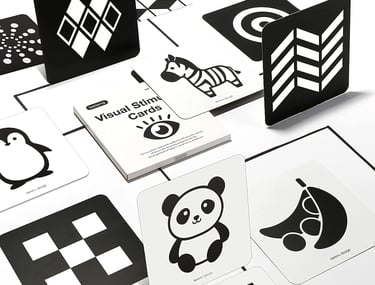
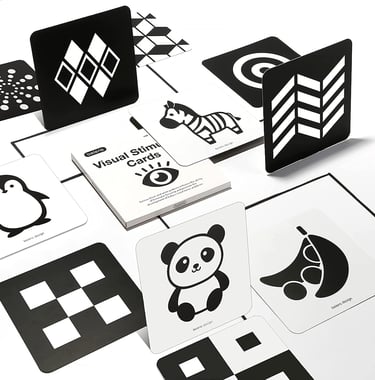
Black and white contrast cards
These bought us longer stretches of tummy time in those early weeks. Both kids stared at them with such focus. I kept a few on the playmat and a few near the changing table because newborn diaper changes are their own form of tummy time.
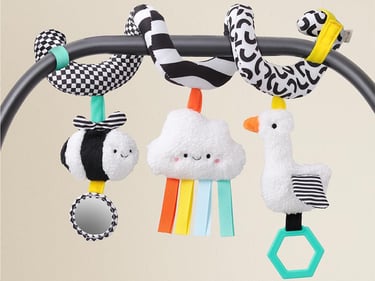
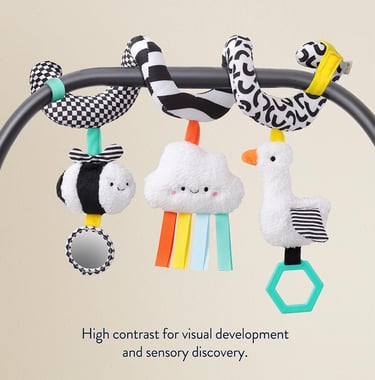
High-contrast hanging toy or mobile
We hung a simple high-contrast mobile above the playmat and it kept both babies engaged before they were able to roll or grasp toys. It was such an easy way to support head turning and visual tracking without overstimulation.
Early movement + tummy time
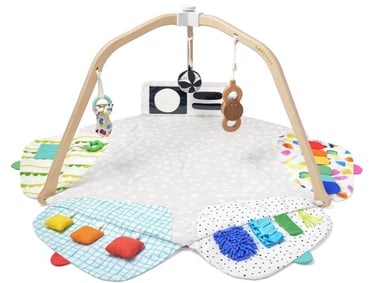
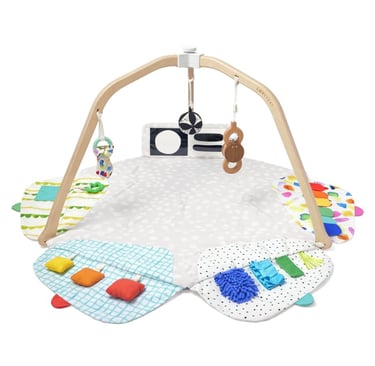
Playmat
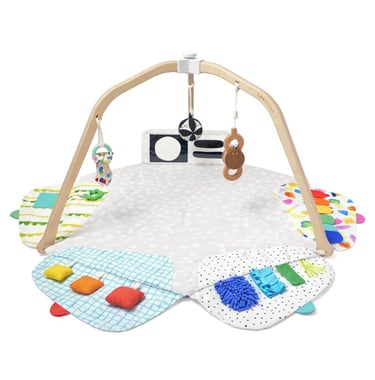
Our playmat was home base for the whole first year. With my first baby we used the Lovevery mat and loved how simple and thoughtful it was. With my second, the Fisher-Price Kick & Play Piano was the unexpected MVP because she could activate the keys with her feet long before her hands cooperated. Both encouraged reaching, kicking, and longer tummy time.
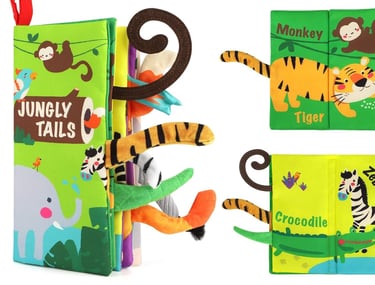
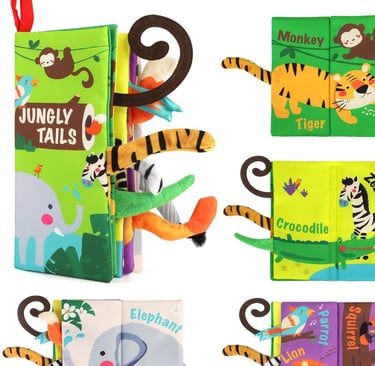
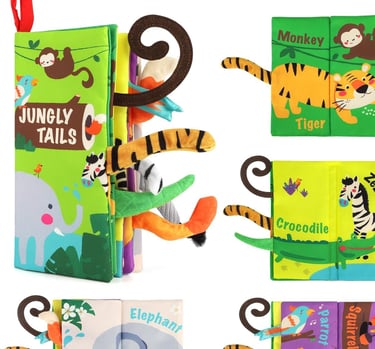
Soft crinkle book
These came with us everywhere at this stage. Lightweight, easy to wipe down, and visually interesting without being loud. I kept one on the playmat and one in the diaper bag.
Our most-used toys for 0–3 months
3–6 Months: Grasping, Mouthing & Early Cause-Effect
Sensory + Mouthing Play
Teethers and soft silicone toys
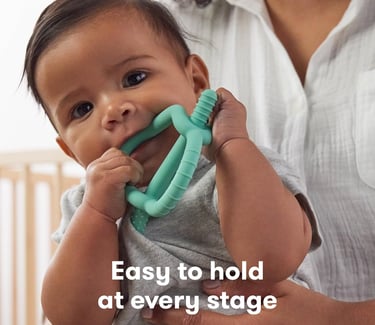
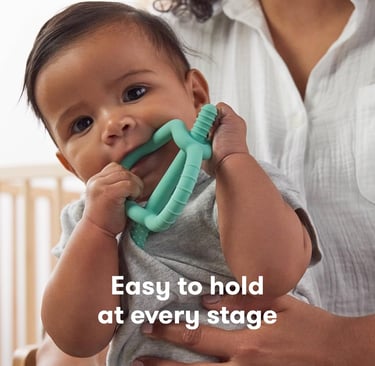
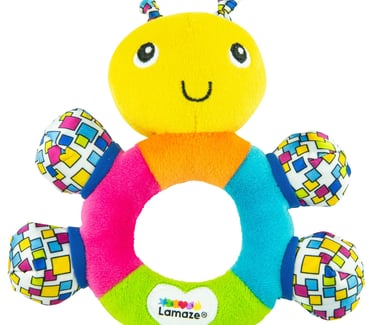
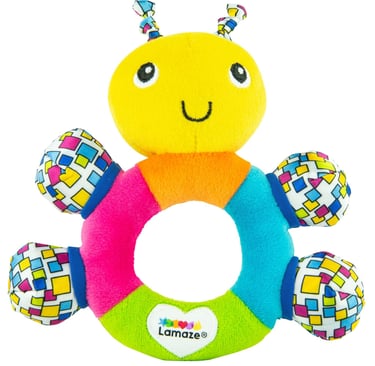
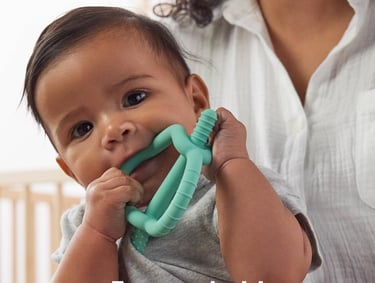
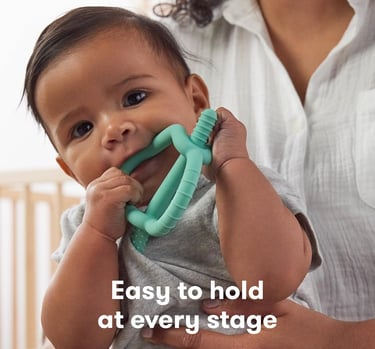
This was the phase where everything went straight to the mouth. Silicone teethers and ring-style toys were perfect for tiny hands and gave them something safe to explore orally. Both of mine used these daily in the stroller, on the playmat, and in the carseat.
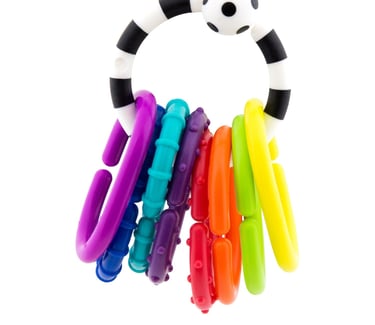
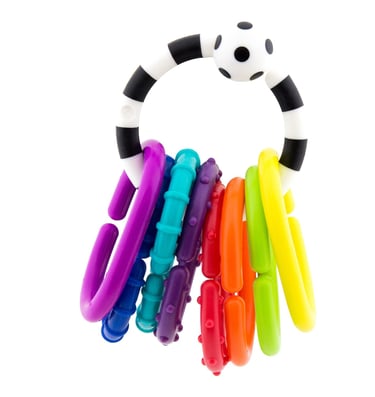
O-links
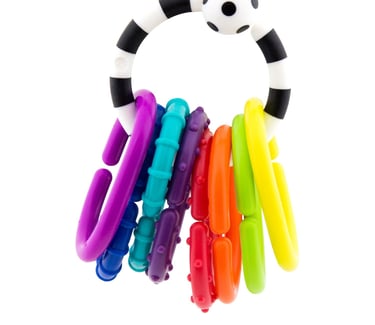
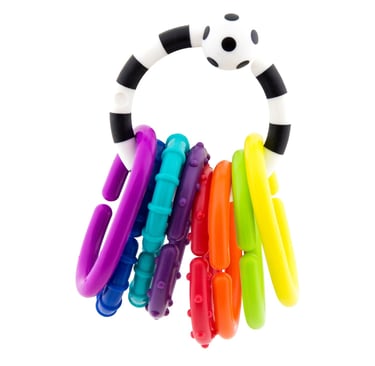
These are not technically “toys” but they might as well be. We used them to attach teethers, crinkle toys, pacifiers, and rattles to the stroller or the playmat so nothing rolled away. They’re also fun for babies to grasp and chew on their own.
Grasping + Exploring Objects
Soft rattles
Around this age, shaking becomes a thing and rattles suddenly make sense. We liked soft ones that didn’t weigh a ton, so they were easier to lift and didn’t bonk anyone in the face during excitement (which definitely happened more than once).
Crinkle books
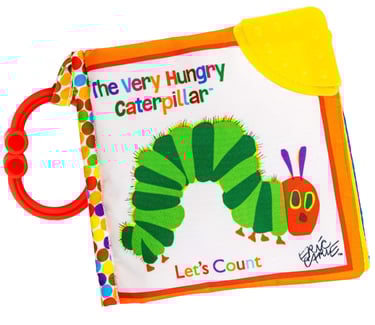
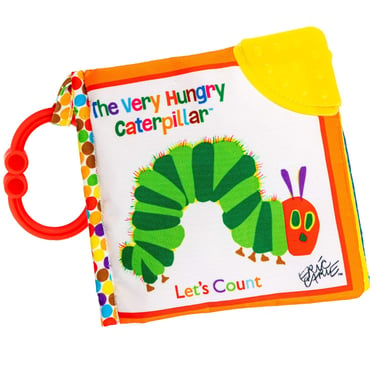
These stuck around from the newborn stage. Now they became more interactive because babies could actually grab pages and bring them toward their face. Still a staple in the diaper bag.
Early Cause & Effect
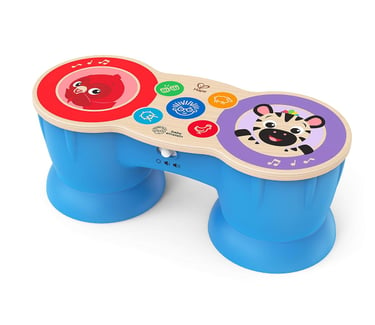
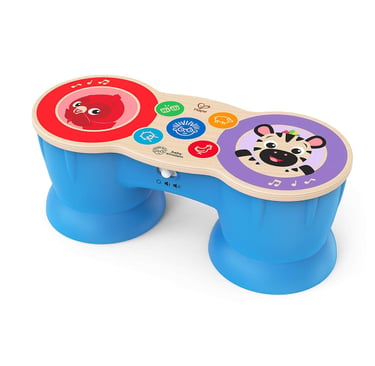
Small piano or drum
My toddler was my fine motor baby and loved precision toys. My second baby was more of a “movement + cause-effect” baby, and she loved banging on anything that made noise. A small baby-friendly keyboard or drum made sense during this stage because it rewarded effort immediately.
Our most-used toys for 3–6 months:
6–9 Months: Cause-Effect, Repetition, and Tiny Experiments
Cause & Effect
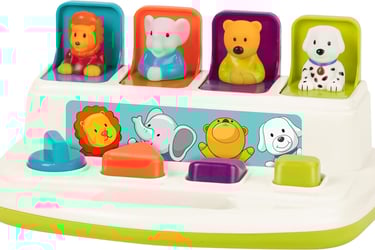
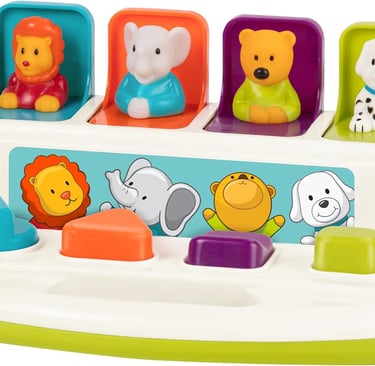
Pop-up toy
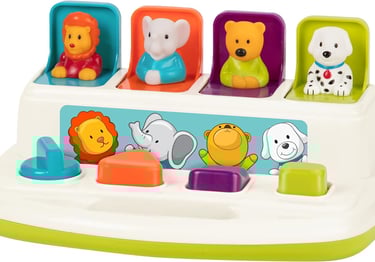
This was one of those unexpected favorites in our house. Ours had little animals that would pop open when you pressed, turned, or slid the matching button. My toddler loved the precision of closing each door carefully, while the baby loved pressing everything as hard as she could to make something happen. It’s such a simple toy, but the reward loop is perfect for this age.
Ball cylinder or Montessori-inspired ball toys
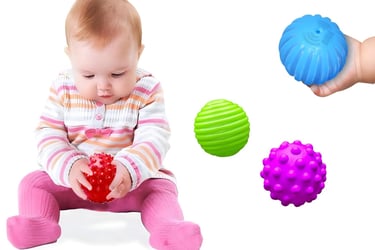
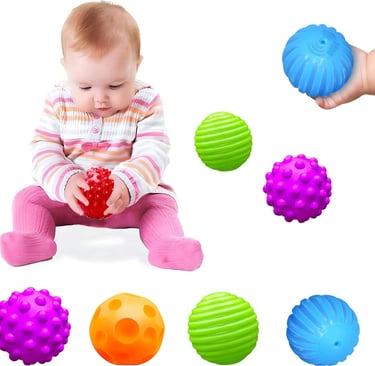
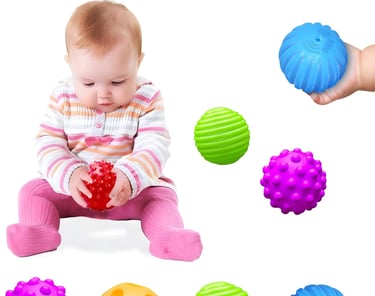
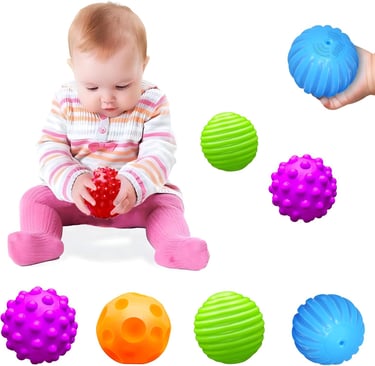
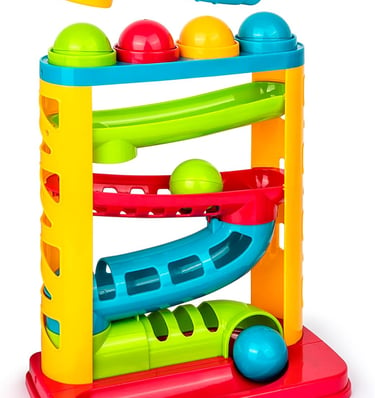
Around this time, babies start to understand “if I push it, it rolls.” Our ball cylinder was basically a tiny physics experiment and kept both kids busy rolling it back and forth during tummy time and early crawling. It was also one of the first toys where I saw sustained focus longer than 30 seconds.
Music + Sound Exploration
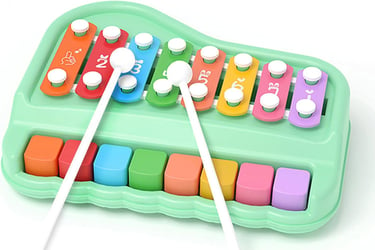
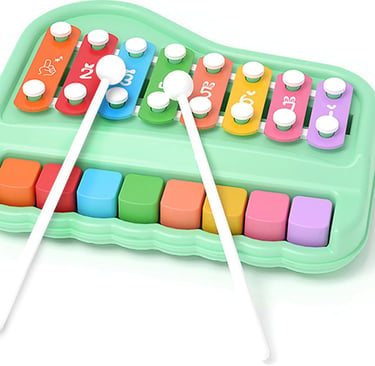
Small piano or drum
Both of my kids loved making noise during this stage, just in completely different ways. My toddler tapped gently and experimented with the keys, while my baby preferred enthusiastic banging that felt more like a workout. Both versions count as early cause-effect play and it bought me a few hands-free minutes while they figured out how to make different sounds.
Object Exploration + Dexterity
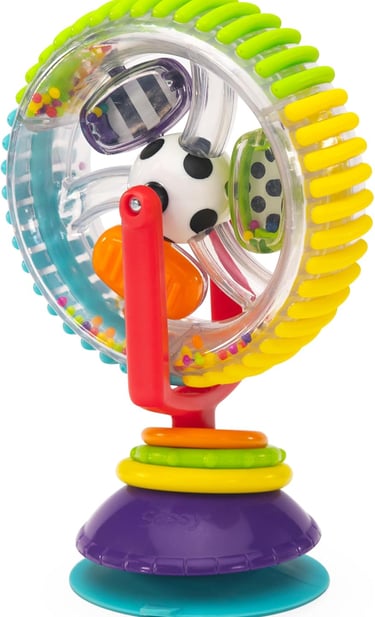
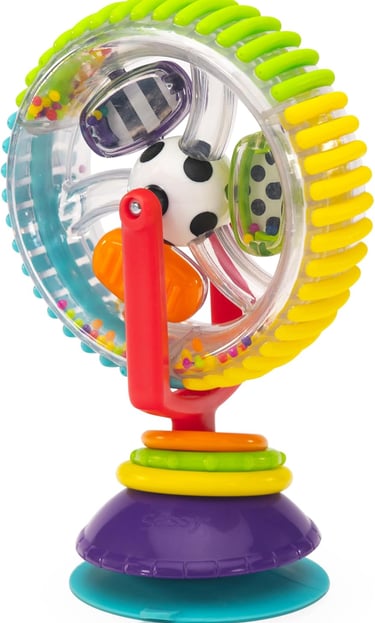
Suction toys
These lived on our high chair tray during solid meal attempts and also stuck to our playmat. It’s a fun introduction to object permanence and “sticky vs not sticky” without being messy. Also gave me time to prep meals without someone trying to crawl into the fridge.
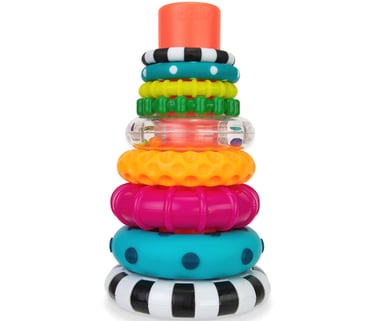
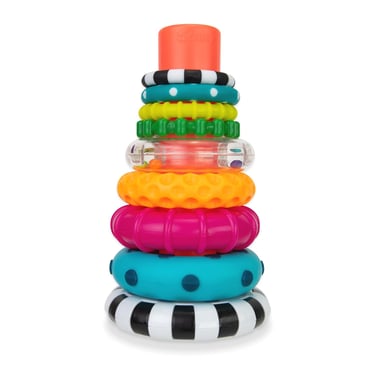
Ring stacker
No stacking yet, just mouthing and banging the rings against the floor or each other. I noticed early on that my toddler was more precise here and would “try” to place the rings, while the baby just used them as noise makers or teething toys. Both were age appropriate and kept them busy long enough for me to unload the dishwasher which, honestly, counts as a win.
Our most-used toys for 6–9 months:
9–12 Months: Problem Solving, Mobility, and ‘Let Me Try’ Energy
Posting + Problem Solving
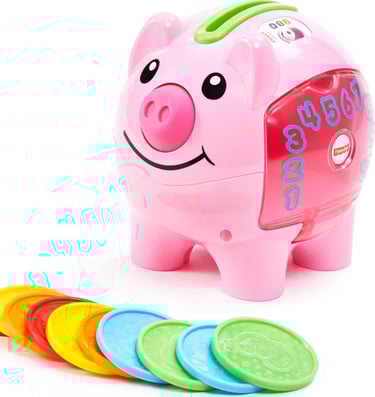
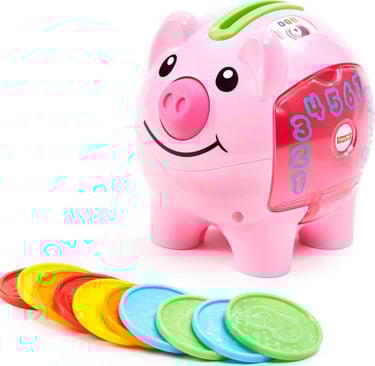
Posting toys (coin box, shape drop, etc.)
This was the phase where both kids suddenly wanted to put things in things. Posting toys made so much sense developmentally because they rewarded precision, repetition, and just enough challenge. My toddler cared more about matching shapes and colors, while the baby was thrilled as long as something disappeared into the slot. Both versions are totally normal for this age and kept them focused for longer stretches than I expected.
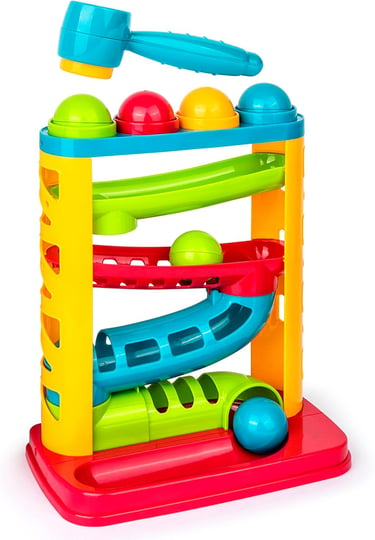
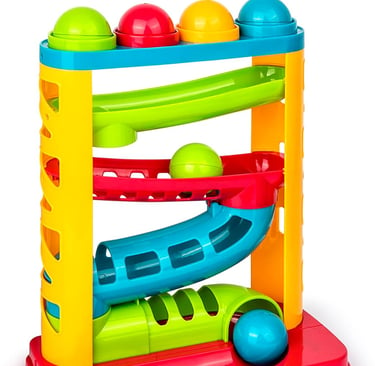
Ball run or ramp
If I had to pick one toy that defined this window, it would be a ball run. Dropping a ball into a chute and watching it roll down became a whole routine in our house. My toddler approached it like a puzzle and experimented with different balls, and the baby just giggled every time it popped out the bottom and immediately crawled after it.
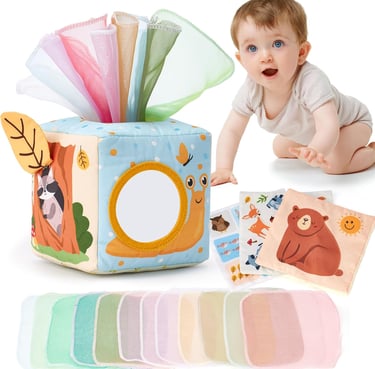
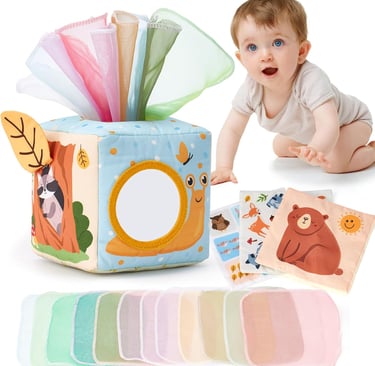
Tissue pull box
This is basically a baby magic trick. It’s inexpensive and buys so much independent play. We used both a store-bought silicone version and a DIY one made out of a wipes container with scarves. Both earned a permanent spot in the play rotation until well past the one-year mark.
Mobility + Vertical Play
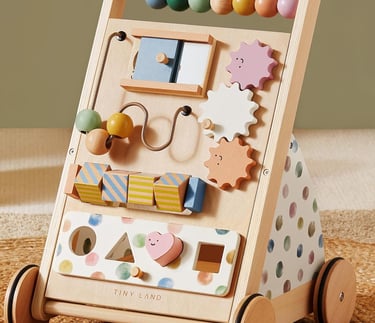
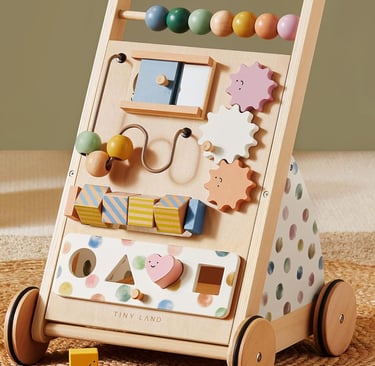
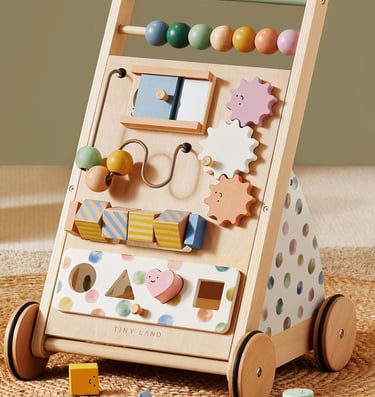
Push walker
Once crawling became fast and intentional, the push walker opened up a whole new world. My toddler used it carefully and slowly, and my baby took off like she was training for a race. It gave both kids confidence before they started cruising along furniture.
Activity table or couch edge
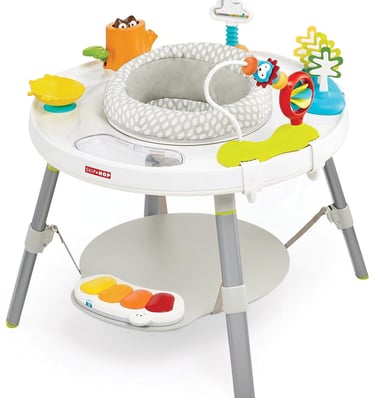
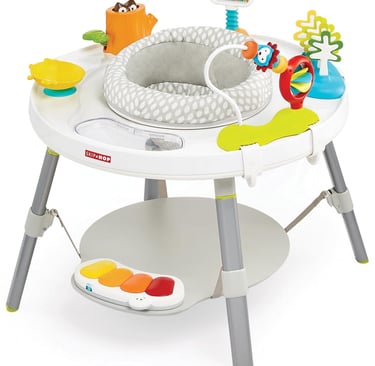
Around this time, standing becomes the preferred way to play. Our activity table lived in the living room for months and gave the baby a safe place to pull up and explore toys at a new height. Before that, the edge of the couch or coffee table did the job just as well.
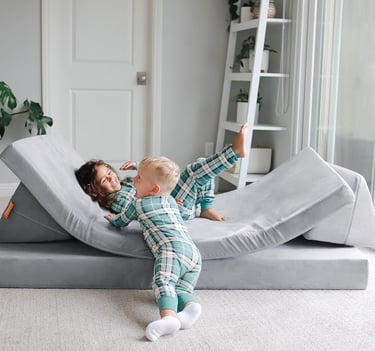
Climbing cushions (Nugget or similar)
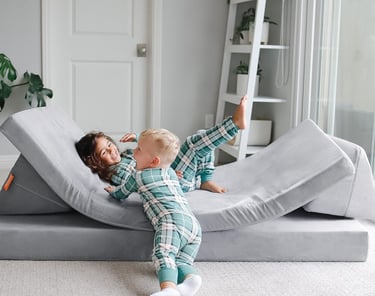
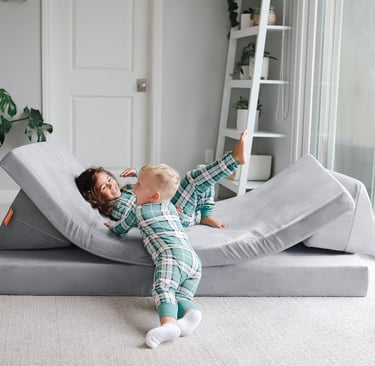
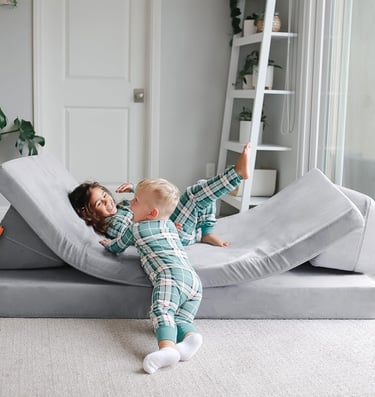
The Nugget earned its keep during this stage. Our baby started climbing over it, crawling under it, and eventually using it to pull up and get to toys. This was also the moment I realized I had a gross motor baby compared to my toddler, who at this age cared much more about fine motor activities.
Chase + Retrieval Play
Rolling balls
Nothing fancy here — just rolling a ball across the room and letting the baby chase after it. It’s a surprisingly good way to burn energy indoors and encourages early coordination and crawling speed. My toddler used it as a chance to “coach,” which was honestly adorable and bought me time to make lunch.
Our most-used toys for 9–12 months:
Toy Rotation + Keeping Play Interesting
I’ve learned that babies don’t need a ton of toys out at once. We kept most toys in a basket and only rotated a few out at a time. This made the play area feel calmer and actually helped them focus longer. Both kids played better with fewer options, and it kept toys feeling “new” without constantly buying more.
Sometimes rotation was as simple as moving the ball run to a different part of the living room or bringing out a posting toy during the afternoon slump. There was no schedule or system, just a quiet rule of “less out is more used.”
What This Looked Like in Our House by Stage
0–3 months
Lots of visual tracking, tummy time, and little bits of movement
3–6 months
Mouthing everything, shaking toys, and exploring how objects sound and feel
6–9 months
Cause-effect became the big theme here, along with banging, rolling, and early experiments
9–12 months
Posting toys, ball ramps, and anything that involved crawling, cruising, or chasing across the room
What We Used Most in the First Year
If you want to browse everything in one place, I linked all of our most-used toys here.
For transparency, some of these links are affiliate links, which means I may earn a small commission at no cost to you. We only link things we genuinely used and loved.